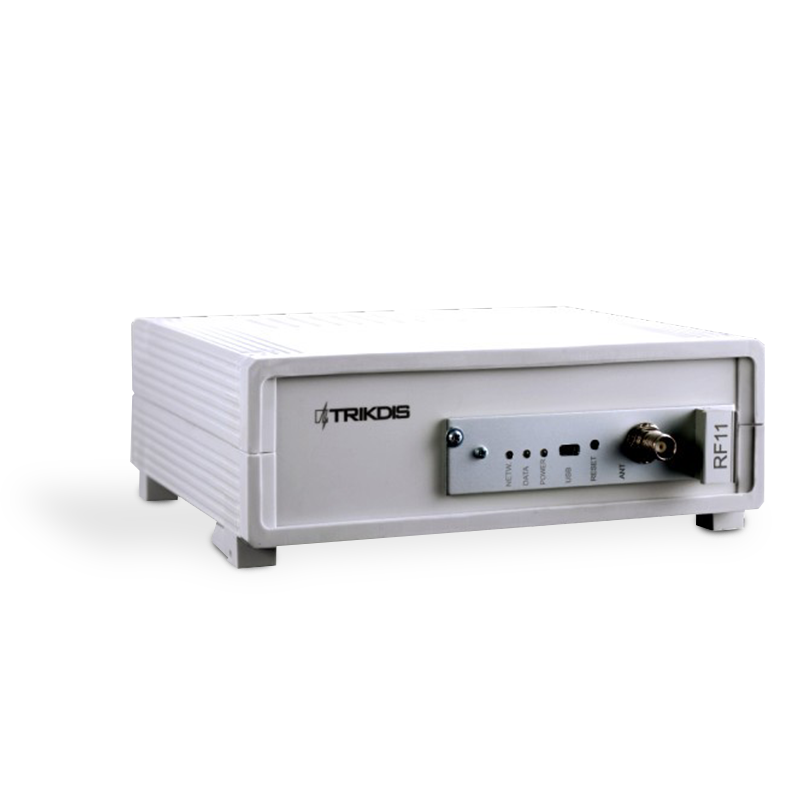
The RFH11 is a professional-grade radio receiver designed to capture encoded radio messages within VHF or UHF frequency ranges. Engineered for Central Monitoring Stations (CMS), it supports a wide array of encoding systems including RAS3, RAS2M, LARS, LARS1, and Milcol-D. With its programmable filters and integrated buffer for 300 events, the RFH11 provides a rock-solid, standalone reporting channel that is completely independent of cellular networks and internet connectivity.
Operates in either 146-174 MHz (VHF) or 430-470 MHz (UHF) bands. This flexibility allows for deep signal penetration and long-distance reception tailored to local radio licensing requirements.
Advanced integrated module capable of decoding RAS-3, RAS-2M, LARS, LARS-1, and Milcol-D formats. Ensures seamless compatibility with a diverse fleet of radio transmitters.
Features an internal storage for the last 300 received messages. This provides a critical safety net, ensuring that event history can be reviewed even during temporary CMS software interruptions.
Delivers data to monitoring software via a standard RS232 port using industry-leading protocols like Surgard and Monas3. Designed for "plug-and-play" integration with most professional CMS suites.
High sensitivity (not lower than 0.5 µV) for capturing weak signals from distant transmitters.
Narrow channel separation (12.5 kHz) for efficient spectrum usage and reduced interference.
Frequency setting error of no more than ± 200 Hz, ensuring high-precision resonance.
Supports FFSK/FSK modulation for robust data integrity over the air.
Programmable time filters to automatically reject duplicate messages (recommended interval: 90 seconds).
Subsystem-based filtering: define which specific encoding systems or subsystems are allowed for reception.
Account ID filtering: set specific ranges of authorized transmitter account numbers.
Repeater filtering: manage and filter signals based on the source repeater to optimize network routing.
Single RS232 (DB9) data output port for direct connection to the monitoring computer.
Selectable output protocols: Surgard (standard) or Monas3 (optimized for MonasMS).
Adjustable baud rates for RS232 communication to match legacy or modern hardware requirements.
Configurable service messages (Power ON, Low Battery, MCI Error) to keep the CMS informed about receiver health.
Primary power supply from standard 100-240V AC (50/60 Hz) networks.
Integrated backup battery support: connects to a 12V 7Ah battery for up to 12 hours of operation during grid failure.
Visual LED diagnostics: Network status (message reception), Data status (unsent messages), and Power health (voltage level).
Built-in USB connection for easy parameter configuration using R11config software.
| Operating frequency range | 146 – 174 MHz (VHF) or 430 – 470 MHz (UHF) |
| Separation of channels | 12.5 kHz |
| Frequency setting error | not more than ± 200 Hz |
| Sensitivity | Not lower than 0,5 μV |
| Modulation | FFSK/FSK |
| Decoded formats | RAS-3, RAS-2M, LARS, LARS-1, Milcold-D |
| Output formats | Monas3 and Surgard |
| Storage of message | 300 last received messages |
| Primary power supply | 100 – 240 V (50 / 60 Hz) AC network |
| RS232 data output ports | 1 x DB9 |
| Operating temperature | From 0°C, to +55°C |
| Dimensions | 225 x 235 x 115 mm |
| Weight | 1.21 kg, with cables |
Product Resources
Everything you need to install, configure, and certify this product.
Interested in integrating this solution? Provide your details below, and our regional sales manager will contact you with a customized offer.
Fill out the form below, and we will be in touch shortly.